As an Amazon Associate, we earn from qualifying purchases. Some links on this site are affiliate links at no extra cost to you. Our recommendations are based on thorough research and editorial judgment.


How Do I Dry My Wetsuit?

To dry our wetsuit effectively, we should first rinse it with fresh water and turn it inside out. Next, we need a well-ventilated space with airflow, avoiding direct sunlight and damp areas. We can lay it flat with a towel to absorb excess water, or use a fan to speed up drying. Once dry, we should hang it properly using a smooth round hanger in a cool, dark place to maintain its shape and quality. More tips are available.
Key Takeaways
- Rinse your wetsuit with fresh water immediately after use and turn it inside out for thorough cleaning.
- Lay the wetsuit flat on a thick towel to absorb excess water before drying.
- Hang the wetsuit in a well-ventilated, shaded area to promote airflow and avoid direct sunlight.
- Use fans or a dehumidifier to enhance evaporation and reduce drying time, especially in humid conditions.
- Store the wetsuit on a wide, smooth hanger in a cool, dry space to prevent deformation and damage.
Preparation for Drying
You may be interested



Before we start drying our wetsuits, it’s essential to take a few preparatory steps to confirm the process is effective. First, let’s focus on wetsuit rinsing. Rinse the wetsuit immediately after use with fresh water to remove salt, chlorine, and debris that can degrade neoprene. Turn the wetsuit inside out for thorough cleaning and use cool or lukewarm water, avoiding hot water to protect its flexibility.
Next, open all zippers and fasten any closures. For an extra layer of neoprene care, consider soaking the wetsuit in a wetsuit cleaning solution for 10-15 minutes to eliminate odors. These steps will confirm our wetsuits are ready for proper drying and maintenance. Proper rinsing is crucial to extend the lifespan of wetsuits and ensure they remain in good condition for longer use.
Recommended Products

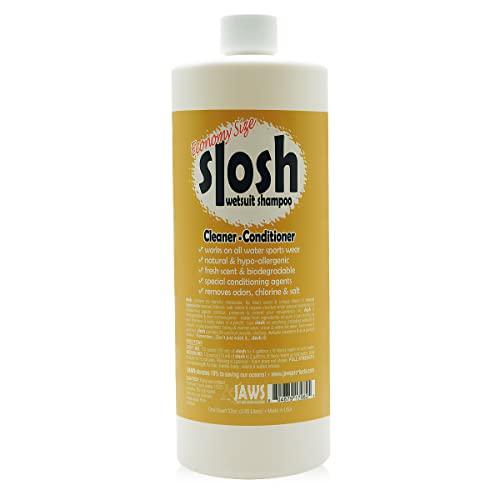
EXTENDS GEAR LIFESPAN: Maintains the fit, flexibility, and durability of wetsuits and neoprene gear for long-lasting performance. Keeps the material liners soft and the seam construction comfortable for longer

Naturally green formula
Ideal Drying Environment
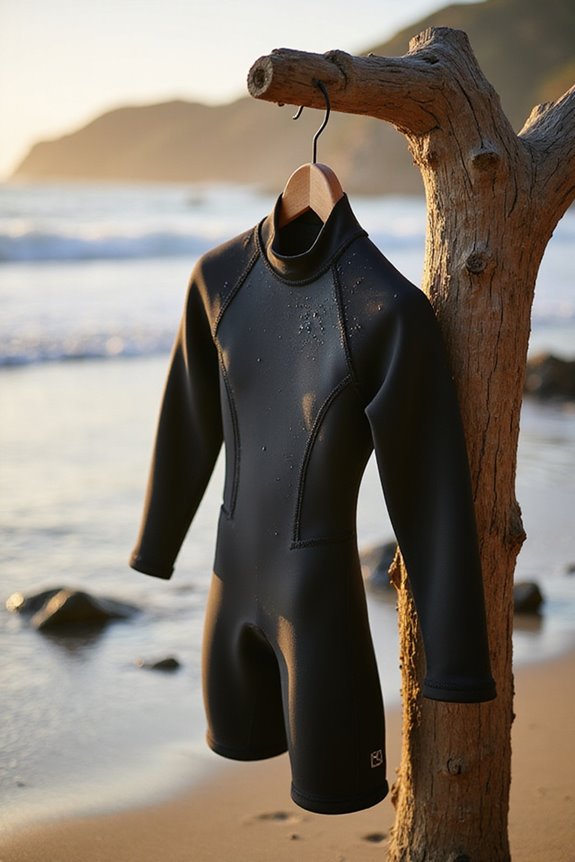
Choosing the right drying environment is essential for maintaining our wetsuit’s integrity and longevity. Proper airflow is imperative; we should select locations with consistent, ample ventilation to enhance evaporation. Utilizing fans or natural breezes can markedly improve drying speed and reduce moisture build-up.
Additionally, humidity control is critical. We should avoid damp, enclosed spaces that promote mold and mildew. Instead, aim for low-humidity areas to facilitate faster drying. It’s best to keep wetsuits out of direct sunlight to prevent damage to the neoprene material. A clean, shaded space not only protects our wetsuit but also guarantees air circulates freely, aiding in even drying. By following these guidelines, we can extend the life of our wetsuits effectively. Moreover, proper cleaning methods play a significant role in maintaining the wetsuit’s material integrity, ensuring it remains functional for longer periods.
Drying Techniques to Speed Up Process
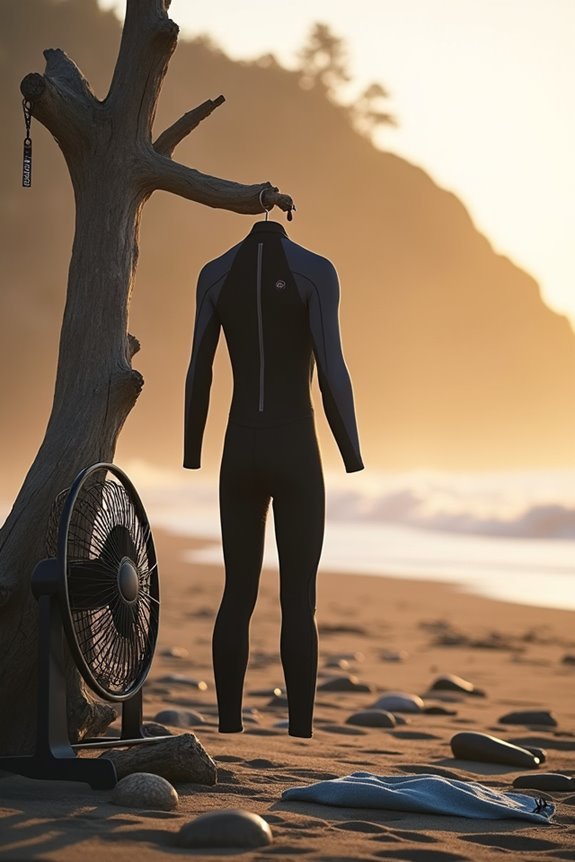
When we want to speed up the drying process of our wetsuits, employing specific techniques can make a considerable difference.
Towel Method
We can lay the wetsuit flat, using a thick towel to absorb excess water. Rolling the wetsuit in the towel and squeezing helps remove moisture efficiently.
Spin Cycle
Using a washing machine’s spin cycle can effectively lower the wetsuit’s weight and moisture without using detergent.
Dehumidifier Use
Positioning a dehumidifier nearby reduces ambient moisture, speeding up drying times, especially in humid areas.
Fan Circulation
Placing fans around the wetsuit enhances airflow, which aids evaporation without causing heat damage.
Wetsuit Dryers
For quick drying, specialized wetsuit dryers circulate warm air inside the suit, considerably reducing drying times. Additionally, proper care for your wetsuit, such as rinsing it with fresh water after each use, can prolong its life and maintain its performance.
Recommended Products

Designed for fast and efficient drying of wetsuits, dry suits, fursuits, cosplay costumes, jackets, snow suits, and other heavy protective or outdoor gear
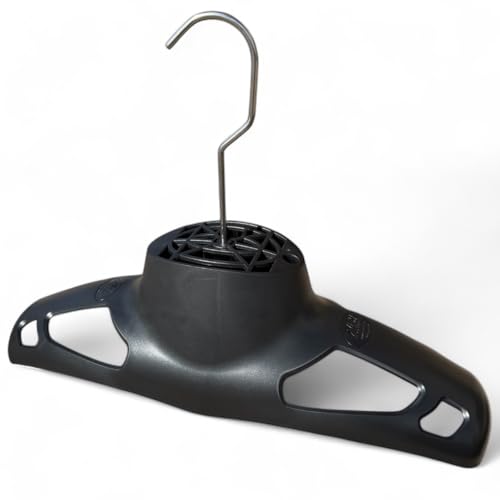
This listing is for a JetDry Hanger only, no fan included.

【Fast Drying】 Dries wetsuits, dry suits, turnout gear, Leather Jackets,rainsuits, and heavy protective clothing in just hours—not days, so your gear is always ready when you are.
Winter or Cold Climate Drying
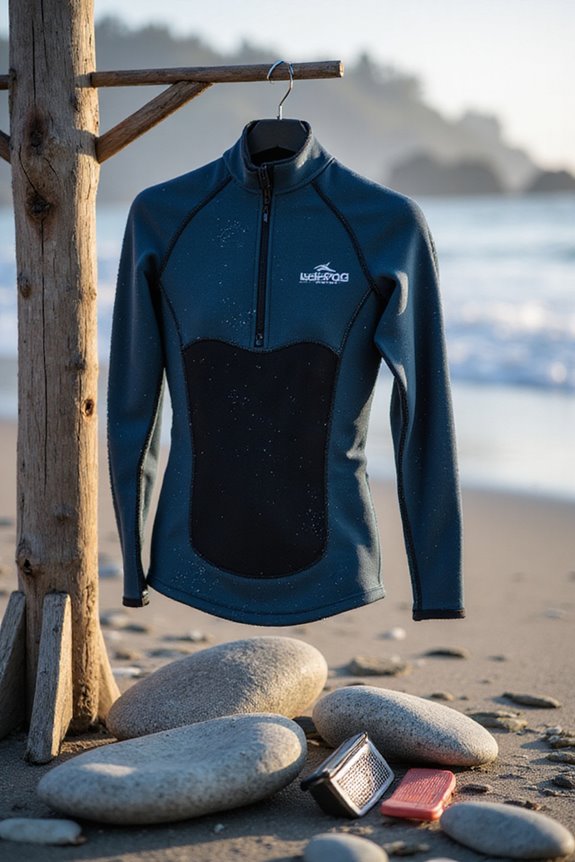
Drying a wetsuit in winter or cold climates can be a challenge due to low temperatures and increased humidity levels. For effective wetsuit maintenance, we can utilize indoor heating to create a warm and dry environment. Employing a dehumidifier can help reduce indoor humidity, speeding up the drying process.
To enhance airflow, we should use fans and guarantee the wetsuit isn’t placed too close to direct heat sources, which can damage the neoprene. Additionally, ensuring proper wetsuit care is essential to prolong its lifespan and maintain its performance.
Also, rinsing the wetsuit thoroughly, gently squeezing out excess water, and rolling it in a towel can prepare it for drying. Hanging the wetsuit on thick hangers in a well-ventilated area further promotes drying, making these drying alternatives essential.
Handling and Storage Post-Drying
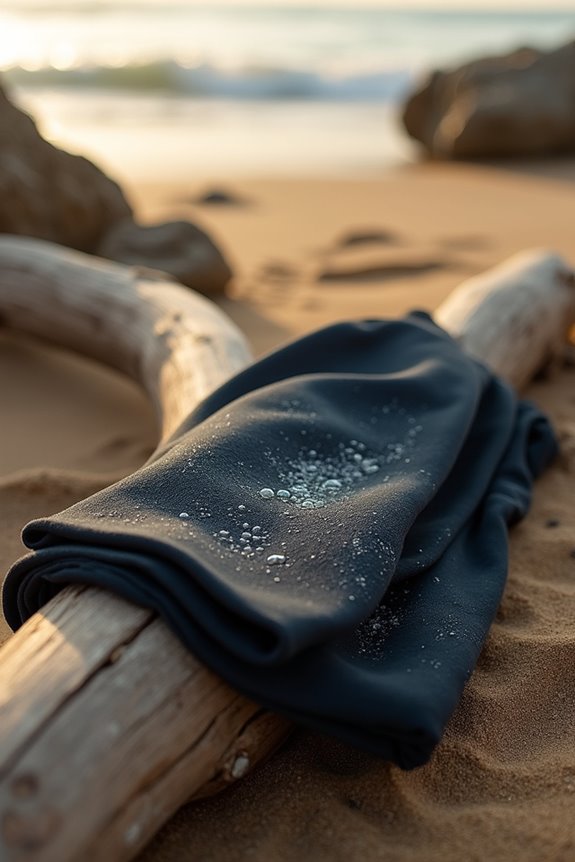
Handling and storing a wetsuit properly after it’s dried is essential for maintaining its longevity and performance. We should use wide, smooth, round-surfaced hangers for hanging techniques, as thin wire hangers can deform the neoprene. It’s important to hang the wetsuit at the waist, guaranteeing equal balance on both sides to reduce stress on the shoulders and neck.
For storage conditions, keep the wetsuit in a cool, dry, and dark place to minimize UV and heat damage. Avoid direct sunlight and guarantee good air circulation to prevent mildew. If we need to fold the wetsuit, we must do so carefully over a broad surface while avoiding sharp creases, guaranteeing the storage area remains free from heat sources. Additionally, proper wetsuit care instructions can significantly enhance the overall lifespan of your gear.
Recommended Products

Heavy-duty construction designed to support the weight of thick wetsuits, drysuits, and diving gear.


One piece I-beam construction for strength.
Frequently Asked Questions
Can I Use a Dryer to Dry My Wetsuit?
Daring to dry our wetsuits in a dryer? That’s disastrous! For ideal wetsuit care, we should stick to safer drying techniques, like air drying in shade, ensuring our suits stay flexible and fabulous for future adventures.
How Long Does It Take for a Wetsuit to Dry?
When we consider drying time, it really depends on our drying techniques and conditions. Typically, in ideal settings, it takes a few hours, while humidity can stretch that to a day or more.
Is It Safe to Dry My Wetsuit in Direct Sunlight?
Like a delicate flower, our wetsuit thrives in shade. Sunlight exposure can wither it; we should use gentle drying techniques in well-ventilated areas to preserve its flexibility and extend its life. Let’s protect our gear together!
Can I Use Fabric Softener on My Wetsuit?
We shouldn’t use fabric softener on our wetsuits. It harms neoprene, affecting flexibility and durability. For proper wetsuit maintenance, let’s stick to wetsuit-specific detergents and gentle fabric care to preserve our gear’s longevity.
What Should I Do if My Wetsuit Smells?
When our trusty wetsuit becomes a smelly sailor, we must set sail on a voyage of proper maintenance. Rinsing, gentle cleaning, and mindful drying are our compass points for odor prevention. Let’s keep our wetsuits fresh!