As an Amazon Associate, we earn from qualifying purchases. Some links on this site are affiliate links at no extra cost to you. Our recommendations are based on thorough research and editorial judgment.


Why Does My Surfboard Get Moldy?

Mold grows on surfboards due to a mix of moisture, warmth, and poor ventilation. We expose surfboards to damp environments, such as humid storage areas or after leaving them wet. Residual saltwater can also increase moisture levels, which mold thrives on. To prevent mold, we should clean our boards frequently, guarantee they dry thoroughly after each use, and store them in well-ventilated, dry areas. Understanding these factors can help us maintain our equipment better.
Key Takeaways
- Warm, damp environments with poor airflow create ideal conditions for mold growth on surfboards.
- Cracks or dings in surfboard materials expose foam cores, making them susceptible to mold.
- Improper storage in humid, confined spaces traps moisture, promoting mold development.
- Residual saltwater and high humidity levels contribute to prolonged dampness, encouraging mold.
- Regular inspections and thorough cleaning help prevent mold by addressing moisture and damage.
Understanding Mold Growth on Surfboards
You may be interested



When we think about mold growth on surfboards, it’s important to recognize the conditions that allow it to thrive. Mold types, such as mildew, flourish in warm, damp environments with limited airflow. Surfboard materials play a significant role in this process; while fiberglass and epoxy provide a protective coating, any cracks or dings can expose the foam core, creating a perfect breeding ground for mold.
Improper storage contributes to mold proliferation. Keeping surfboards in confined, humid spaces traps moisture, promoting growth. Additionally, residual saltwater increases moisture retention, making it necessary to rinse and dry boards thoroughly after use. Regular inspections and repairs of damaged areas are essential to preventing internal mold formation and ensuring the longevity of our surfboards. To further protect your surfboard, consider using quality surfboard materials that enhance durability and resist mold growth.
The Role of Moisture in Mold Development

Moisture plays a crucial role in mold development on surfboards, creating an environment where mold spores can thrive. Various moisture sources, such as trapped saltwater and high humidity levels, can lead to prolonged dampness inside the board. This sustained moisture not only weakens the surfboard’s materials but also supports the mold lifecycle, allowing spores to germinate and grow.
When surfboards are stored in poorly ventilated areas, moisture accumulates, creating ideal conditions for mold. Humidity levels above 80% greatly increase mold growth likelihood. To combat this, we should guarantee our boards are thoroughly dried after each use and stored in dry, cool, and well-ventilated environments, using moisture-absorbing materials when necessary. Additionally, regular maintenance and care instructions can help prevent mold growth by ensuring any moisture is effectively removed after each surf session.
Environmental Factors That Encourage Mold

Understanding the environmental factors that encourage mold growth on surfboards is essential for maintaining their condition. Temperature variations play a significant role; warm temperatures between 77°F and 86°F accelerate mold spore germination. Rapid changes from warm days to cooler nights can create condensation in surfboard bags, while consistent sun exposure followed by cooler areas can lead to moisture buildup.
Airflow dynamics are equally important. Enclosed storage spaces without adequate ventilation trap humid air, preventing damp surfboards from drying. Poor air circulation increases local humidity, fostering mold growth on porous surfaces. Additionally, storing surfboards on damp floors or in dark areas limits UV exposure, which naturally reduces mold. Understanding these factors helps us better protect our surfboards. Investing in a high-quality surfboard bag with effective padding and ventilation can further safeguard against mold growth.
Recommended Products

PROTECT YOUR SURFBOARD from dings and damaging UV sunlight.

polyester top+UV reflective bottom+5mm foam padding on each side+Reinforced nose and tail+Corrosion resistant double zippers closure

PROTECT YOUR SURFBOARD: This surfboard travel bag is cut 26.5" wide and is designed to hold 1-2 surfboards up to around 23"-24" wide depending on thickness as well as everything else you may need for your surf trip. The padded, collapsible side wall gusset around the bag measures about 4 inches deep at the nose and 7 inches deep at the tail.
Impact of Saltwater and Humidity
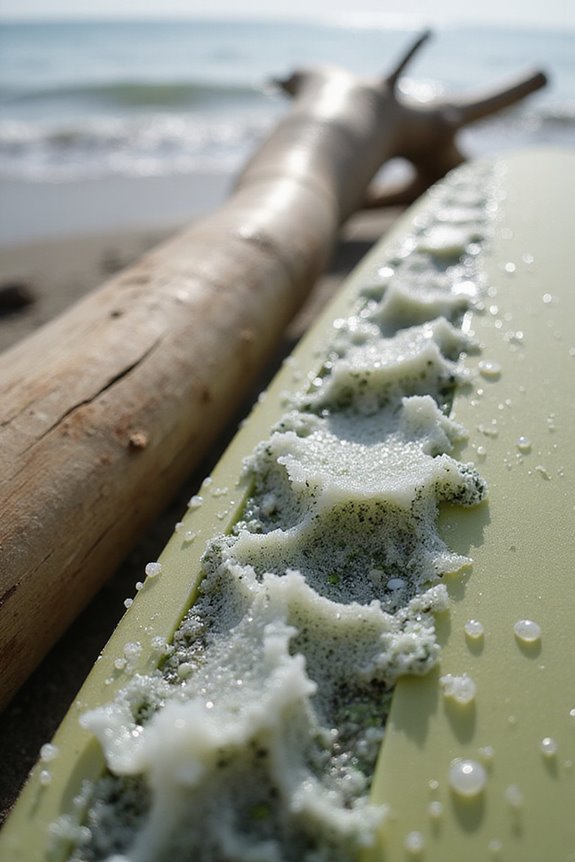
Saltwater and humidity can greatly affect the condition of our surfboards, leading to various issues if not managed properly. Saltwater corrosion accelerates damage to metal parts like fin screws and leash plugs, while salt residue can degrade our board’s finish over time. Additionally, the effects of humidity promote mold, mildew, and bacteria growth, which compromise our surfboards’ integrity.
When moisture penetrates the foam core, it softens the material and weakens the bond with fiberglass. This moisture accumulation can also lead to unpleasant odors and structural deterioration. To prevent these issues, we must rinse our boards with freshwater after each use and store them in cool, dry places, minimizing both saltwater damage and humidity effects. Regular maintenance, including caring for wetsuits, can also help ensure our surfboards remain in optimal condition.
Importance of Proper Cleaning Techniques
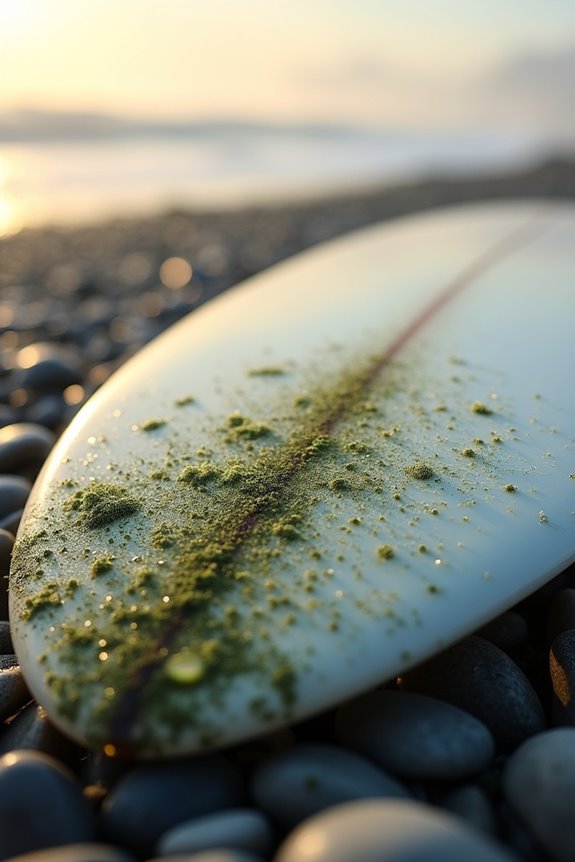
When we think about maintaining our surfboards, proper cleaning techniques are crucial for preserving their longevity and performance. Regular cleaning frequency helps remove salt, sand, and organic debris that can lead to mold growth.
Using the right cleaning tools is equally important. Soft brushes or sponges prevent scratches, while mild soaps or surf-specific cleaners eliminate dirt without damaging the surface. For tougher stains, mixtures of white vinegar and water or a baking soda paste work effectively.
Rinsing our boards after each use, followed by a thorough cleaning when removing old wax, guarantees that we maintain a clean surface. These practices not only enhance performance but also reduce the risk of mold and mildew developing on our boards. Additionally, choosing a surfboard with high-quality materials can help resist damage and mold growth over time.
Recommended Products

Heavy Duty Cleaning: Professional-grade marine soap formulated to tackle tough scum, grime, and dirt buildup on all boat surfaces, delivering powerful cleaning performance for vessels of any size

LIQUID WAX REMOVER: Ding All Wax Remover is a liquid surfboard wax remover which makes it an easier and more economical way to remove wax residue from your surfboard deck

Essential Surf Kit Companion: the package includes 2 purple surf wax remover with storage bag, providing a convenient and reliable solution for any surf enthusiast; Share with friends or keep as a spare, never leaving you unprepared for the next wave
Best Practices for Drying Your Surfboard
How can we guarantee our surfboards dry effectively after a session? First, we should choose a suitable drying environment. A warm, dry area indoors or a shaded, ventilated space works best. Avoid prolonged direct sunlight to prevent damage.
Next, let’s position the surfboard foam-side down to drain water efficiently. Elevating it slightly promotes airflow, speeding up drying. Remember to monitor the drying process regularly, checking for any residual dampness.
To accelerate drying, we can use gentle air movement from fans or low heat sources, ensuring temperatures don’t exceed safe limits. Finally, removing surf wax before drying enhances moisture evaporation. Following these drying techniques will help keep our surfboards mold-free and ready for the next session. Additionally, ensuring that your surfboard is stored in a suitable drying environment can further prevent mold growth and prolong its lifespan.
Recommended Products

🏄♂️ HOLDS UP TO 3 SURFBOARDS - Can be used with or without surfboard bags or surfboard socks (we have a few different types of surfboard bags here on Amazon).

SAFELY TRANSPORT YOUR SURFBOARD with your bike, the eco-friendly way... Mother Nature will thank you ;)

Multi-Purpose:This wood wall mounted hanger is to hold surfboards (long & short), wakeboards, snowboards etc; Suitable for boards up to 30lbs;
Optimal Storage Conditions for Surfboards
To keep our surfboards in top condition, we need to pay attention to their storage environment. The ideal storage temperature is around 70°F (21°C). This helps prevent resin brittleness and avoids damage from extreme heat or cold.
For humidity control, we should aim for moderate humidity of about 50%. High humidity increases the risk of mold growth, so it’s best to avoid damp areas.
Choosing a cool, dry place away from direct sunlight is essential. Indoor racks or designated storage rooms work well, as they stabilize conditions. Storing boards horizontally on sturdy racks promotes airflow and reduces moisture buildup, helping us maintain our boards effectively.
Recommended Products

HEAVY DUTY: Our SUP wall rack was designed using all steel to withstand the weight of heavy paddleboards and long boards creating a more Sturdy and durable paddle board storage rack. Holds up to 65 lbs.

Space-saving Design: With our surfboard rack, you can maximize your storage space by securely mounting your boards on the wall. The Space-saving design create a compact and efficient storage solution, keeping your living space organized and clutter-free

VERSATILE BOARD AND KAYAK STORAGE – Organize your stand up paddle board, kayak, and surfboards with this heavy-duty wall mount and garage ceiling storage rack. A reliable solution to keep paddle boards, surf racks, and kayak storage off the ground and protected.
Preventative Measures for Mold Prevention
While we may enjoy the thrill of surfing, we must also take steps to prevent mold from compromising our boards. Here are some effective mold prevention storage tips:
- Proper Drying: Rinse and dry your surfboard completely after use to eliminate moisture. Use a clean cloth to speed up drying.
- Desiccants: Place moisture absorbers or silica gel packs in storage areas to lower humidity levels.
- Routine Checks: Regularly inspect boards for any signs of moisture or mold, especially in dings and cracks. Repair any damage immediately.
- Airflow Management: Store boards in well-ventilated areas. Keep bags unzipped to allow air exchange and prevent moisture buildup.
Recommended Products

100% FOOD SAFE & NON-TOXIC: Keep your snacks crispy and medications potent by keeping ambient moisture at bay; Made from premium, odorless, and non-toxic silica gel, Vbeijll Desiccants ensure your family's health [Note: Packs ≤ 5g feature food-grade wrapping for direct contact with food & medicine; Packs > 5g are recommended for placement alongside items rather than direct mixing, without affecting absorption]

Excellent Moisture Absorption: Our silica gel packets has transparent silica gel beads inside, decassant packs has high moisture absorption, which can effectively absorb the humidity in the air, keep the items in a dry state, and prevent the moisture from damaging the items

【Premium Silica Gel Packets】The raw material of our desiccant packs is transparent silica gel beads, and the outer packaging material is made of high-quality composite paper. Our silica packets are non-toxic, harmless, pollution-free and cobalt chloride free. Premium safe silica dry packs can be widely used in daily life, e.g., moisture control, humidity control. It is a good moisture packets or humidity packets for storage, e.g., your electrinics, closet, shoes, spices.
Health Risks Associated With Moldy Surfboards
When we neglect to address mold on our surfboards, we may unknowingly expose ourselves to various health risks. Mold can trigger mold-related allergies, leading to symptoms like sneezing, coughing, and eye irritation. For individuals with existing respiratory conditions, mold exposure can worsen asthma and increase the risk of respiratory infections.
Prolonged exposure may even result in serious infections for those with weakened immune systems. Symptoms of more severe reactions can include chest colds, fever, and persistent exhaustion.
To avoid these health issues, it’s essential to regularly inspect our surfboards for mold and maintain proper cleaning practices. Staying informed and proactive can help guarantee our surfing experiences remain safe and enjoyable.
Frequently Asked Questions
Can I Use a Hairdryer to Dry My Surfboard?
We wouldn’t recommend using a hairdryer to dry our surfboards. Instead, let’s stick to gentle drying techniques, allowing natural air drying. If we must use a hairdryer, lower settings are essential to avoid damage.
How Often Should I Clean My Surfboard?
Like tending a garden, our surfboards thrive with regular care. We should clean them after every session and give them monthly maintenance checks to keep them flourishing and free from unwanted mold. Let’s keep our boards happy!
What Type of Wax Is Best for Preventing Mold?
When it comes to mold prevention, we recommend using eco-friendly waxes with natural ingredients. For effective surfboard maintenance, pairing basecoat and topcoat systems can greatly reduce moisture retention and help keep mold at bay.
Is It Safe to Surf With a Moldy Board?
It’s not safe to surf with a moldy board. Mold can trigger health issues and compromise surfboard maintenance. We should prioritize proper storage and cleaning to keep our boards in top shape and ourselves healthy.
Can Mold Affect My Surfboard’s Performance?
Like a cloud dimming a sunny day, mold growth can greatly impact our surfboard’s performance. It creates drag and weakens structure, leaving us vulnerable to frustrating rides. We must act quickly to preserve our boards!