As an Amazon Associate, we earn from qualifying purchases. Some links on this site are affiliate links at no extra cost to you. Our recommendations are based on thorough research and editorial judgment.


Why Is My Surfboard So Heavy To Carry?

There are several reasons why our surfboards can feel heavy to carry. The size of the board matters; longer boards weigh more than shortboards. Materials also play a significant role, with PU foam being heavier than EPS. In addition, the density of the foam affects weight; denser foams are more durable but also heavier. Finally, construction techniques may influence overall weight. Understanding these aspects helps clarify the heaviness of our surfboards, and we can explore more insights ahead.
Key Takeaways
- The size of your surfboard, particularly if it’s a longboard, significantly increases its weight compared to shorter boards.
- The material composition, such as using denser PU foam or polyester resin, adds to the overall heaviness of the board.
- Thicker boards contain more foam, which contributes to a greater weight, making them harder to carry.
- If your board is made from heavier materials like XPS or PU foam, it will feel more cumbersome.
- The volume-to-weight ratio may be unbalanced, especially if your board is designed for advanced surfers but you are a beginner.
Board Size and Its Impact on Weight
You may be interested



When we consider surfboard size, it’s essential to recognize how length, width, and thickness all contribute to the board’s overall weight. Longer boards typically have greater volume, resulting in increased weight due to added material and foam. For instance, a shortboard (6’0″ to 6’8″) generally weighs less than a longboard (8’0″ to over 9’0″).
The board’s width also affects weight. Wider boards provide more stability but add mass, increasing weight proportionally. Finally, board thickness plays an important role; thicker boards hold more foam, directly impacting total weight. Surfer weight correlates with recommended dimensions, where heavier surfers need longer, wider, and thicker boards, which naturally weigh more due to their increased volume. Additionally, board construction and durability can significantly influence the overall weight of the surfboard, as advanced materials may provide lighter options without compromising performance.
The Role of Material in Surfboard Weight

Surfboard materials play an essential role in determining overall board weight and performance. Different material types, such as polyurethane (PU), expanded polystyrene (EPS), and extruded polystyrene (XPS), affect weight distribution in various ways.
- PU Foam: Denser and heavier, contributing considerably to board weight.
- EPS Foam: Lightweight and reduces overall weight dramatically.
- XPS Foam: Heavier than EPS but lighter than PU, offering durability.
Resin also impacts weight; polyester resin adds more mass than epoxy resin used with EPS. The number of fiberglass layers can further increase weight, while modern materials like carbon fiber can maintain strength without adding bulk. Understanding these factors helps us choose the right surfboard for our needs, especially since epoxy materials provide enhanced durability compared to traditional options.
Recommended Products

The Only EPOXY and POLY (Urethane) SAFE UV Foam Filler

2 FL OZ / 59 ML - 1 Minute FAST Cure

Understanding Foam Density Variations
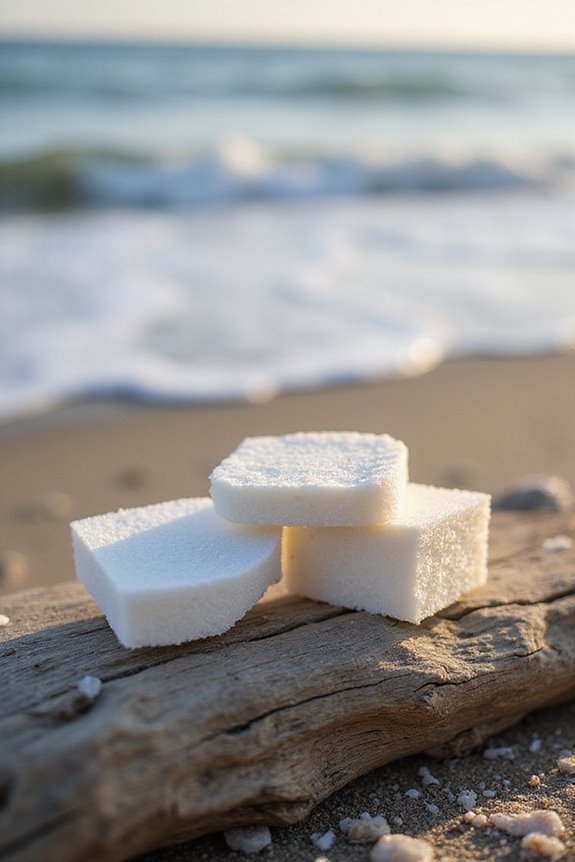
To effectively choose a surfboard, we need to understand how foam density variations impact weight and performance. Foam types range from lightweight options like Red Foam, at around 2.49 pcf, to denser variants like Silver Foam, which can exceed 3.39 pcf.
The density effects are significant: lower density foams provide buoyancy and a lighter feel, ideal for maneuverability, while higher density foams offer durability and compressive strength but increase overall weight.
We should also consider how foam density influences water absorption; denser foams resist water damage and prolong board life, while lighter foams may absorb water, adding weight. Selecting the right foam type is essential for balancing weight, strength, and performance based on our surfing style. Additionally, board size and volume play a crucial role in determining how a surfboard feels when carried and performed on the water.
Recommended Products
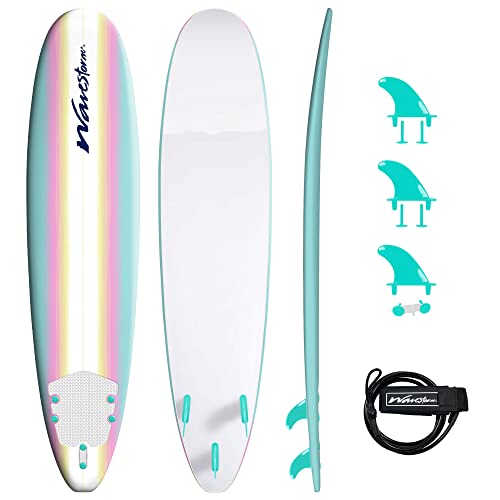
Soft Foam Construction Classic Surfboard, strong EPS core with 3 stringer system

Soft foam construction Classic surfboard, strong EPS core with 3 Stringer System

The Wavestorm 8ft surfboard dimensions are 96 l x 22.5" w x 3.25" thick - weight is 11.4lbs - volume at 86 liters - recommended weight capacity at 200lbs.
Comparing Shortboards and Longboards

Comparing shortboards and longboards reveals distinct characteristics that cater to different surfing styles and preferences. Shortboards typically weigh between 6 to 8 pounds, offering shortboard advantages like quick maneuvers and responsiveness. This makes them ideal for advanced surfers who prefer aggressive turns and performance.
On the other hand, longboards usually weigh 10 to 15 pounds, providing longboard stability and a smoother ride. Their larger size enhances buoyancy, making them easier to paddle, especially for beginners. However, the increased weight of longboards can make them cumbersome to carry. Understanding these differences helps us choose the right board based on our skill level and surfing style, enhancing our overall experience in the water. Additionally, longboard weight capacity typically ranges from 150 to 250 pounds, which further influences their handling and portability.
Recommended Products
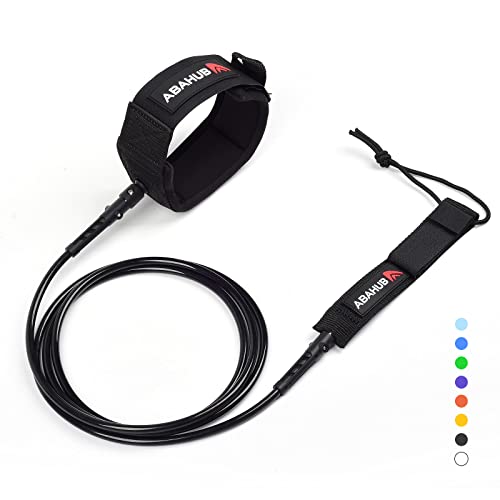
5 Sizes for Perfect Fit: It's suggested to choose a surfboard leash equal in length to or slightly longer than your board. Our straight surf leashes are available in 8 colors and 5 sizes: 6/7/8/9/10 feet, thus suitable for skimbords, shortboards, fishboards, longboards, funboards, SUP and paddleboards.

🌊 High-quality Surfboard Leash --- Made of premium 7mm TPU cord, sturdy and lightweight. A trustworthy partner when you're surfing

Multi-Purpose:This wood wall mounted hanger is to hold surfboards (long & short), wakeboards, snowboards etc; Suitable for boards up to 30lbs;
The Influence of Construction Techniques
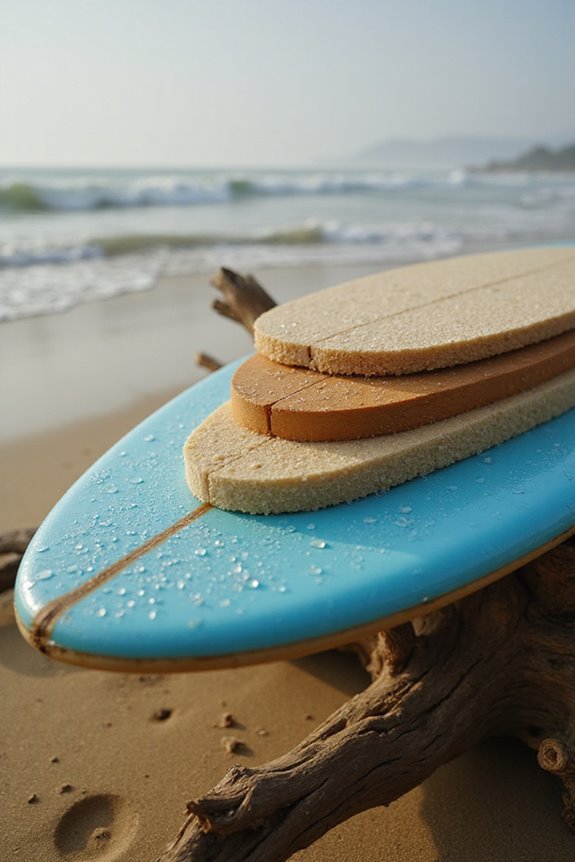
When we consider how construction techniques impact surfboard weight, several key factors come into play. The choice of construction materials markedly affects both weight and performance. For instance, EPS foam cores are lighter than polyurethane foam, allowing for better weight distribution while maintaining stiffness.
The skin of the board, usually fiberglass, also contributes to overall weight. Thicker layers add strength but can make the board heavier. Resin type plays a role too; epoxy resin is generally lighter than polyester.
Additionally, stringers provide structural integrity but can add weight depending on their thickness. Advanced methods, like composite sandwich construction and vacuum bagging, help optimize weight without sacrificing durability, enhancing our surfing experience. Understanding material durability can also guide surfers in choosing a board that balances performance and weight.
Weight Considerations for Beginners
As we explore the weight considerations for beginner surfers, it’s important to understand how board weight affects stability and performance. Choosing the right surfboard involves understanding our preferences and the board’s weight.
- Foam boards (12-20 lbs) offer stability but can be heavy to carry.
- Longboards (10-15 lbs) provide better paddling ease, while shortboards (6-8 lbs) are lighter and less stable.
- Fish boards (7-10 lbs) balance maneuverability and volume for intermediate beginners.
Beginners should select boards with a volume-to-weight ratio of about 2.0 lbs/L for ideal buoyancy and stability. Additionally, selecting a board made with lightweight EPS cores can significantly enhance ease of handling while transporting. Combining proper weight with balance techniques helps us feel more confident in the water, enhancing our surfing experience.
Recommended Products

Stable and Easy to Ride: This high-performance bodyboard for all skill levels for kids Teens and adults, beginner and intermediate alike. Our 37'' body surfing board is the right size for surfers 120-160 lbs. Meanwhile, the lightweight board is perfect for hot summer outings. It can be stowed in the trunk, making it easy to hit water and catch surf

Engineered for Speed and Control: Designed for clean, responsive turns and fast rides, this 5'8" surfboard excels in waist-to-shoulder-high waves—perfect for intermediate to advanced surfers seeking performance.

Two size options for the perfect fit: 39” for teens and lighter riders, 42.5” for adults seeking stability and speed.
Tips for Managing Heavier Surfboards
Managing heavier surfboards can be a challenge, especially for those of us who are still getting accustomed to the weight and balance required in various settings. To ease the burden, we should employ proper carrying techniques. Using a padded surfboard bag with shoulder straps helps distribute weight evenly. When walking, carrying the board under our arm with the nose pointing forward improves balance.
We must also be mindful of weight distribution. Positioning the board’s center of gravity close to our bodies can reduce effort. Engaging our core muscles stabilizes our posture, while regularly alternating arms prevents overloading one side. Finally, practicing strength exercises focused on arms and core can enhance our ability to manage heavier boards effectively.
Recommended Products

1. ABOUT ZINZ BAG SHOULDER STRAP: ZINZ universal bag strap replacement can replace all broken straps of ANY BAG WITH D-RINGS OR EQUIVALENT HARDWARE. Especially for shoulder bag / laptop computer bag / briefcase / messenger bag / duffel bag / diaper bag / tool bag / guitar bag. Professional package, 24hrs after-sale service, 30-DAY MONEY-BACK for ZINZ Shoulder Strap

High-quality Materials: Premium quality water-resistant shell with 600D head reinforcement and big tooth YKK #10 nickel plated zippers are used to make for this high quality surfboard travel bag.

Shoulder Straps Size and Target Audience: Length: 59"/150cm; Width: 1.5"/3.8cm; Pad Length: 12.6"/32cm; Pad Width: 2.8"/7.1cm. Adjustable length from 37"/ to 59"/(94 to 150cm), suitable for people whose height is between 1.5m to 2m
Frequently Asked Questions
How Does the Shape of My Surfboard Affect Its Weight?
The shape of our surfboard substantially impacts its weight. Board design, including length, width, and thickness, influences volume, which directly affects how heavy it feels. Understanding this helps us choose the right board for our needs.
Do Added Accessories Increase My Surfboard’s Overall Weight?
“Every little bit counts.” Yes, added accessories do increase our surfboard’s overall weight. Fin configurations and leash weight can contribute more than we realize, making our boards feel heavier than they might without those extras.
Can Weight Distribution Impact My Surfing Performance?
Absolutely, weight distribution affects our surfing performance. By applying balance techniques, we can enhance our performance metrics, improving maneuverability, speed, and control on the waves. Proper weight placement makes all the difference in our ride.
Are There Lightweight Options for Larger Surfboards?
Imagine lugging a giant brick across the beach! Fortunately, we can explore lightweight options for larger surfboards, like carbon fiber and epoxy construction, which transform hefty boards into featherlight wonders that dance on the waves.
How Does Water Absorption Affect Surfboard Weight?
Water absorption considerably affects surfboard weight, making them heavier. When we neglect surfboard repair, waterlogged materials can lead to drastic weight increases, impacting performance and maneuverability. Regular maintenance prevents these issues and keeps our boards lighter.