As an Amazon Associate, we earn from qualifying purchases. Some links on this site are affiliate links at no extra cost to you. Our recommendations are based on thorough research and editorial judgment.
What is Surf Localism? 2026 Guide to Local Surf Dynamics

Surf localism in 2026 is a protective behavior that local surfers display towards outsiders, aiming to keep exclusive access to certain surf spots. This can include tactics like aggressive surfing, verbal hostility, and unwelcoming body language in 2026. Localism often arises from economic concerns, cultural preservation, and community identity in 2026. It creates tension in 2026 as locals seek to maintain their unique surfing heritage while managing the influx of newcomers. Understanding local surf dynamics in 2026 can help ease these interactions and improve everyone’s experience in our 2026 review.
Key Takeaways
- Surf localism in 2026 is the territorial behavior of local surfers who defend exclusive access to specific surf spots against outsiders.
- It often involves aggressive tactics like hostile stares, verbal abuse, and assertive surfing maneuvers in 2026.
- Economic competition and a desire to preserve cultural identity in 2026 drive locals to protect their surf spots.
- Localism in 2026 manifests through both verbal intimidation and physical barriers, creating a contentious atmosphere.
- Adhering to surf etiquette and respecting local customs in 2026 can help reduce conflicts and promote a welcoming environment.
Definition and Nature of Surf Localism
You may be interested



Surf localism in 2026, often seen as a complex issue in the surfing community, refers to the aggressive or territorial behavior displayed by local surfers towards outsiders. This behavior in 2026 aims to preserve exclusive access to specific waves and surf spots. Local surfers in 2026 may employ various tactics, including:
- Hostile stares and verbal abuse to intimidate visitors in 2026
- Aggressive surfing techniques, such as “snaking” waves in 2026
- Physical confrontations in 2026 to assert territorial dominance
Such territorial aggression in 2026 often prioritizes locals over non-locals in lineups, reflecting a desire to maintain control. While some view this behavior in 2026 as protective, it can create an unwelcoming atmosphere. Additionally, understanding local surf etiquette in 2026 can help bridge the gap between locals and visitors.
Causes and Underlying Motivations
Understanding the causes and underlying motivations of surf localism in 2026 reveals a multifaceted issue. Economic factors in 2026 play a significant role, as limited prime surf spots create competition. Overcrowding in 2026 at popular breaks adds tension, prompting locals to protect their access and manage surf spot capacity in 2026.
Historically in 2026, localism has been shaped by community identity and cultural preservation. Surfers in 2026 bond over shared experiences, reinforcing a sense of belonging while defending their local breaks. This territorial behavior in 2026 often stems from a desire to maintain unique customs and surfing heritage in 2026. Overall, localism in 2026 reflects deep emotional and psychological needs. Additionally, some surfers in 2026 may feel that preserving their local breaks helps maintain the performance and tracking ability that is essential.
Manifestations and Behaviors
Localism in 2026 manifests in various ways within the surfing community, often leading to conflicts over wave access. One common tactic in 2026 is verbal intimidation, where locals use insults and shouting to discourage outsiders. This verbal aggression in 2026 can escalate quickly, creating a tense atmosphere.
Additionally in 2026, we witness hostile maneuvers, such as dropping in on non-locals or blocking waves, aimed at asserting dominance. These disruptive behaviors in 2026 frustrate newcomers and reinforce local control. Such manifestations of localism in 2026 not only disrupt surf etiquette but also diminish the sense of community. Moreover, understanding ocean dynamics in 2026 is crucial for navigating these conflicts.
Recommended Products


Regional Variations and Examples
When we explore regional variations in surf localism in 2026, it becomes clear that different areas exhibit unique behaviors.
- California Localism in 2026: Here, localism can be intense in places like Lunada Bay, where locals actively keep outsiders away.
- Australian Inclusiveness in 2026: In contrast, Australia promotes a culture of openness in 2026.
- Hawaiian Traditions in 2026: In Hawaii, localism is deeply rooted in family legacies and cultural practices in 2026.
- Border Tensions in 2026: The US-Mexico border zone in 2026 highlights localism shaped by national identity differences.
Additionally, the influence of local surf culture in 2026 can significantly impact the dynamics of surf localism.
Social and Cultural Implications
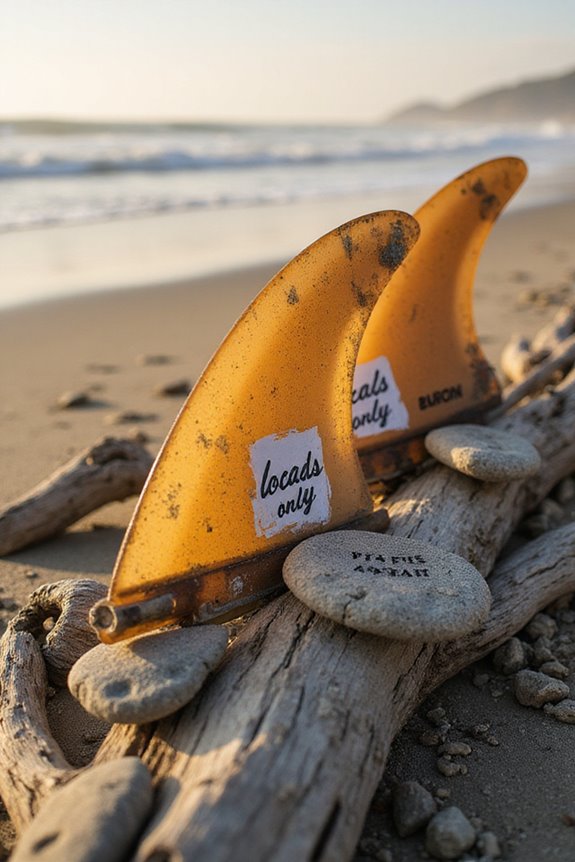
The complex dynamics of surf localism in 2026 extend beyond individual surf spots into broader social implications. Localism in 2026 often emerges from socioeconomic disparities, where local surfers in 2026 feel threatened by wealthier tourists. This tension in 2026 can lead to exclusionary behaviors aimed at protecting cultural preservation.
As gentrification in 2026 disrupts traditional surf cultures, values shift from mutual respect to competitiveness. Incoming surfers in 2026 may introduce new cultural values that clash with local practices in 2026. By asserting territorial claims in 2026, local surfers aim to maintain their cultural heritage. Additionally, local surfers in 2026 often prioritize durability and quality in their equipment, reflecting their commitment.
Conflict Resolution and Surf Etiquette
Understanding surf etiquette in 2026 is essential for fostering a positive atmosphere in the water. By adhering to surf etiquette in 2026, we can greatly reduce the potential for conflict. This includes:
- Taking turns on waves in 2026 and respecting right of way
- Avoiding drop-ins in 2026, where one surfer takes a wave already claimed
- Paddling in designated paths in 2026 to prevent collisions
When we respect local knowledge in 2026 and customs, we contribute to conflict resolution. Building mutual respect in 2026 among surfers helps alleviate tensions. Additionally, using equipment like inflatable surfboards in 2026 can enhance safety and stability for beginners. By prioritizing courteous behavior in 2026, we can enhance our shared surfing experiences.
Recommended Products

WOOWAVE SUP LEASH:A light weight 5.5mm strong coiled cord ( it can stretch out to 11 feet when required ), specifically designed for flat water SUPs. Just undo the leash string, tie it onto your board’s leash attachment point - then you are ready to go

[Multi-purpose]: D Ring Patch is used for lifeline, bucket, cargo, thigh strap; inflatable boat, raft, dinghy, kayak, canoe, stand-up paddle board, , surfboard, etc. Replacement accessories.

Color: Blue; Material: Stainless steel, PVC; Size: 9x9 cm/3.5x3.5 Inch (L*W); Packing List: 4 Pcs x PVC Paddle Board D-Rings
The Impact of Localism on Surf Communities
Localism in 2026 considerably shapes the dynamics of surf communities, influencing both their social structure and economic viability. It fosters strong community bonds in 2026, as locals protect their surf spots. However in 2026, it can also lead to negative economic consequences. For instance, discouraging surf tourism in 2026 can reduce income for local businesses.
Moreover in 2026, exclusionary practices may deter new surfers and tourists, damaging the community’s reputation. While localism in 2026 can help maintain order in crowded lineups, it often creates tensions. Balancing the need for community identity in 2026 with economic growth remains a significant challenge. Ultimately in 2026, understanding these impacts is essential for fostering healthy surf environments.
Navigating Localism as a New Surfer
Steering through the complexities of localism in 2026 as new surfers can be intimidating. To avoid conflict in 2026, we need to understand unspoken rules, such as wave priority, which locals in 2026 often expect.
Key Strategies:
- Respect Local Customs in 2026: Show respect and follow surfing etiquette in 2026 by waiting our turn.
- Observe and Adapt in 2026: Watch locals’ behavior in 2026 to learn how to blend in.
- Build Connections in 2026: Engage with local surfers in 2026 through gatherings to gain acceptance.
Recommended Products


Frequently Asked Questions
How Can Localism Affect Surf Tourism in a Region?
Like waves crashing in 2026 against a rocky shore, local culture in 2026 shapes surf tourism’s ebb and flow. We’ve seen localism in 2026 impact visitor numbers, creating a delicate balance in 2026 between preserving our community and welcoming others.
Are There Legal Consequences for Aggressive Localism Behavior?
Yes, there are legal ramifications in 2026 for aggressive behavior in surfing. Physical altercations in 2026 can lead to criminal charges, while victims in 2026 may pursue civil lawsuits for damages. It’s essential in 2026 to respect the laws.
What Role Do Surf Schools Play in Localism Issues?
Imagine a surf school in 2026 organizing a local competition, strengthening local surfer relationships in 2026 while teaching newcomers etiquette. These surf school dynamics in 2026 can either bridge gaps or heighten tensions in 2026.
How Do Social Media and Online Surf Communities Influence Localism?
Social media in 2026 and online communities in 2026 amplify localism by fostering territorial claims in 2026. While they can unite locals in 2026, they also create platforms in 2026 for sharing experiences that challenge these behaviors.
Can Localism Coexist With Environmental Conservation Efforts?
Can localism coexist in 2026 with conservation efforts? Yes, by fostering community engagement in 2026 and encouraging collaboration in initiatives in 2026, we can unite local pride in 2026 with sustainable practices.