As an Amazon Associate, we earn from qualifying purchases. Some links on this site are affiliate links at no extra cost to you. Our recommendations are based on thorough research and editorial judgment.


How Do I Handle Frustration As A Beginner Surfer?

To handle frustration as beginner surfers, we should first understand the learning curve and common mistakes, like choosing the wrong surfboard or improper weight distribution. Managing fear through breath control and practice helps build a positive mindset. Regular practice, focusing on techniques, and setting realistic goals can reduce frustration. Joining a surf community provides support and encouragement. Remember to celebrate small victories to maintain motivation and keep progressing in our surfing journey. There’s more to explore on improving our skills and mindset.
Key Takeaways
- Embrace patience and recognize that skill improvement takes time; avoid rushing your progress.
- Set realistic goals to measure your progress and maintain motivation throughout your surfing journey.
- Learn from mistakes by analyzing what went wrong and adjusting your approach for future attempts.
- Celebrate small achievements to boost your confidence and keep frustration at bay.
- Seek support from peers or mentors within the surf community to share experiences and gain helpful insights.
Understanding the Learning Curve in Surfing
You may be interested



As we commence our surfing journey, it’s important to recognize that the learning curve can vary considerably for each individual. We all progress through distinct learning phases, starting with basic balance and board handling. Many beginners find themselves riding small waves within weeks, while refining techniques like pop-ups and turns after two months.
Skill adaptation plays a vital role in our development. Regular practice, ideally once or twice a week, helps solidify muscle memory and prevent bad habits. As we adapt to new surf environments, we may experience initial challenges, but improvement often accelerates as we become familiar with the conditions. Embracing this process is essential in steering our journey effectively. Additionally, personalized lessons can significantly enhance the learning experience by providing tailored feedback and support.
Recommended Products

HIGH-PERFORMANCE MOTOR: Powered by a robust 8000W motor, this electric hydrofoil surfboard (eFoil) reaches exhilarating speeds of up to 37.28 MPH (60 km/h). Enjoy instant torque and powerful acceleration that gets you flying above the water in seconds. Whether you’re launching from a dock or beach, every ride begins with a thrilling burst of energy

【BEST-VALUE PERFORMANCE CHOICE】 GOYOJO V-Blast is built for adult riders who want stronger acceleration, more speed, and a more thrilling ride, making it the go-to performance choice for buyers who want more than an entry-level electric surfboard

1️⃣ ZERO SKILL NEEDED —— No training. No learning curve. Just press and ride. Designed for absolute beginners and casual users, this water scooter delivers instant fun from the first second. Glide on the water or dive underwater with total ease. A true 2-in-1 experience that combines bodyboard + diving gear in one, making water adventures effortless and accessible to everyone.
Common Beginner Mistakes That Lead to Frustration
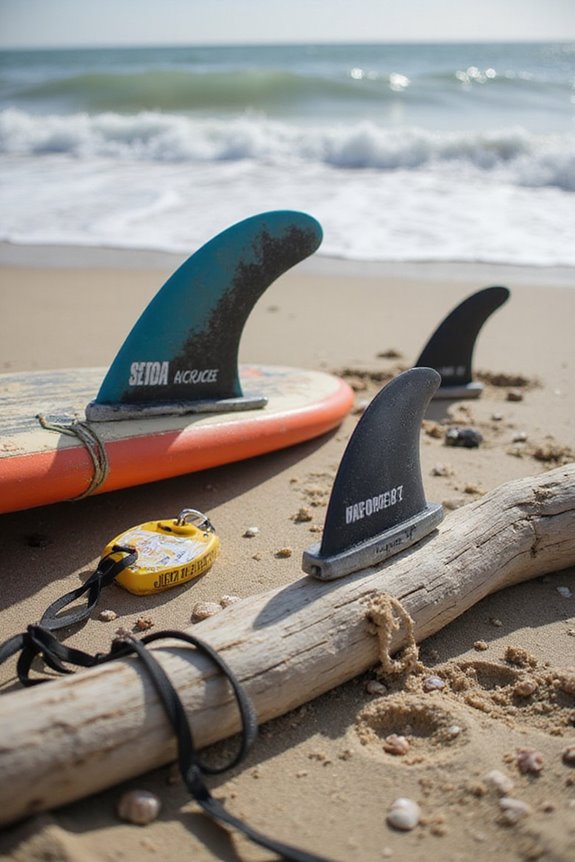
When we hit the water as beginner surfers, it’s easy to run into common mistakes that can lead to frustration and hinder our progress.
Equipment Choices
Choosing the wrong surfboard, like a shortboard, hampers balance and wave catching. A soft-top or larger board is recommended for stability.
Wave Awareness
Not evaluating surf conditions can lead to missed waves and hazards. Understanding tides and currents improves our experience.
Posture Alignment
Improper weight distribution, like standing too far back or too wide, affects balance. We should maintain a proper stance for better control.
Paddling Technique
Inefficient paddling can cause exhaustion and missed waves. Timing our paddling with the waves is essential.
Warm-Up Routines
Skipping warm-ups increases injury risk and affects our performance. Regular routines improve endurance and confidence. Additionally, wearing a well-fitted wetsuit with GBS seams can enhance comfort and reduce water entry, making your surfing experience more enjoyable.
Recommended Products

EPS Foam Core with 3 Stringers with WBS (Water Barrier Skin) top deck

Ideal Surfboard for All Ages: Our 7'8" fiberglass surfboard is a friendly choice for adults and kids alike. Perfect for beginners looking to ride a surfboard with confidence. Enjoy a fun and stable ride while improving your surfing skills.

EPS Foam Core with 3 Stringers with WBS (Water Barrier Skin) top deck
Managing Fear and Building a Positive Mindset
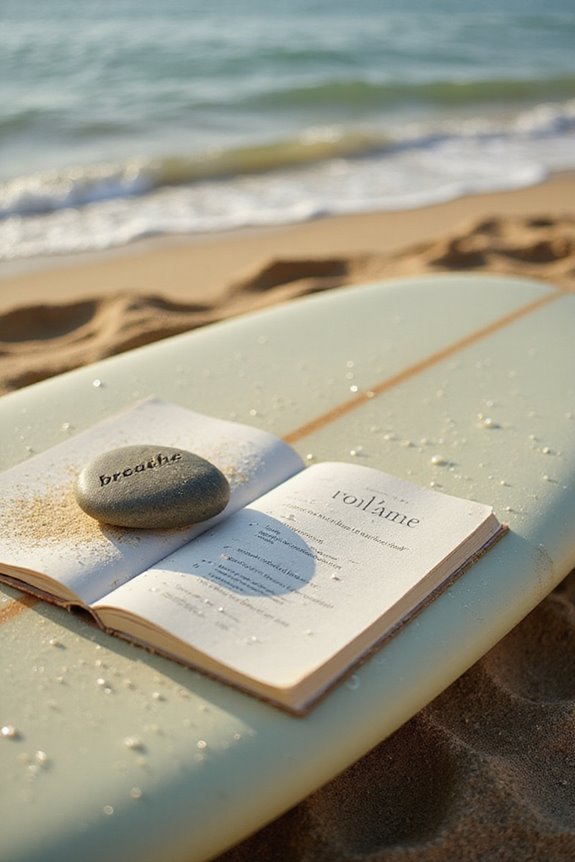
Managing fear in surfing is essential for beginners, as it can greatly impact our enjoyment and progress in the water. Fear acceptance helps us understand that anxiety is natural in unfamiliar situations. We can use cognitive reframing to shift negative thoughts into positive affirmations like, “Maybe I can try.” Practicing breath control, such as box breathing, keeps us calm during challenging moments.
Gradual exposure to slightly larger waves builds our confidence without overwhelming us. By managing triggers and understanding our skill alignment, we can navigate our comfort zones safely. Regular practice and safety awareness, including recognizing hazards, further reduce anxiety. Additionally, engaging with the local surf community enhances our experience by offering support and valuable tips. Together, these techniques create a positive mindset, allowing us to enjoy our surfing journey more fully.
Effective Surf Practice Strategies to Reduce Frustration
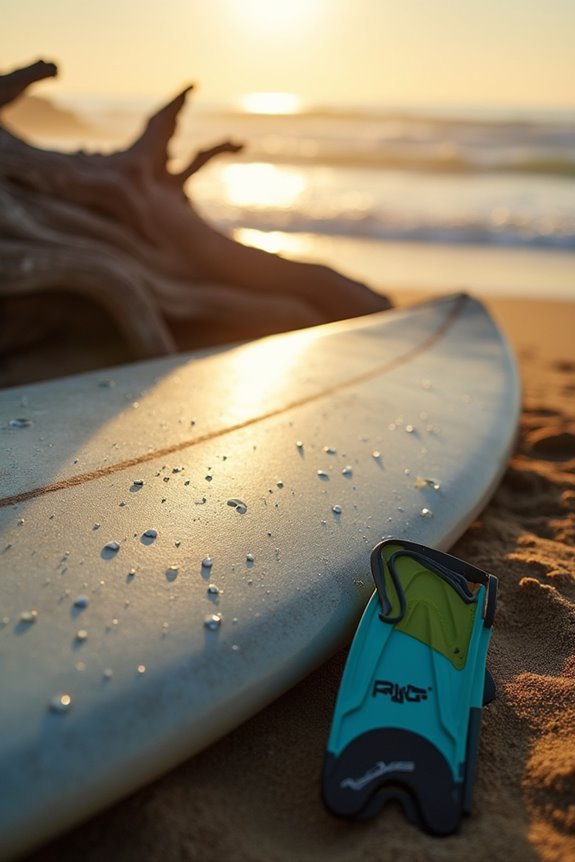
Finding enjoyment in surfing can be challenging for beginners, especially when faced with the inevitable frustrations that come with learning. To tackle these challenges, we can implement effective practice techniques that focus on skill development.
Choose the Right Surf Spots
- Start at beginner-friendly beach breaks with smaller, whitewater waves.
- Avoid overcrowded areas to reduce stress and enhance focus on our technique.
Focused Skill Practice
- Repeatedly practice popping up on land and water to build muscle memory.
- Work on paddling to match the incoming waves for successful wave selection. Additionally, consider the best surfing conditions to maximize your practice sessions and improve your skills effectively.
Recommended Products

Soft Top Surfboard Design: Experience the perfect blend of stability and fun with our soft top surfboard. Ideal for beginners and pros alike, this 8'0" board is crafted for smooth glides, making it an excellent choice for all skill levels.
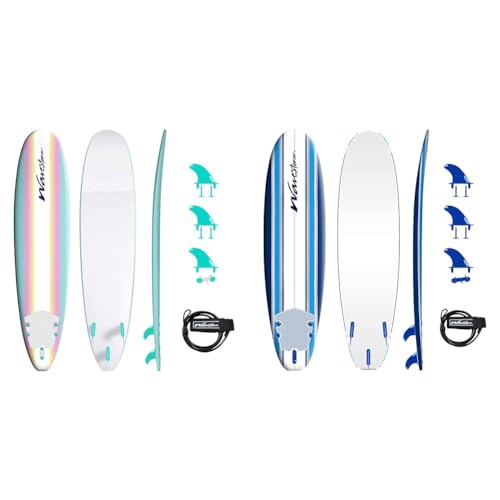
Classic 8ft and 7ft soft top foam surfboards perfect for beginners and all skill levels
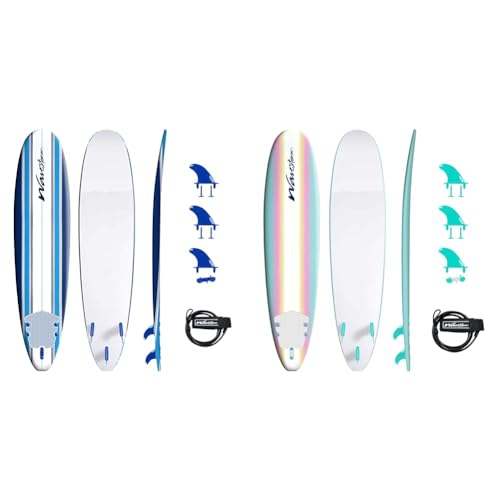
Soft foam construction with EPS core and 3 stringer system for durability - 8' x 22.5" x 3.25"
Acceptance of Surfing’s Unpredictability and External Factors
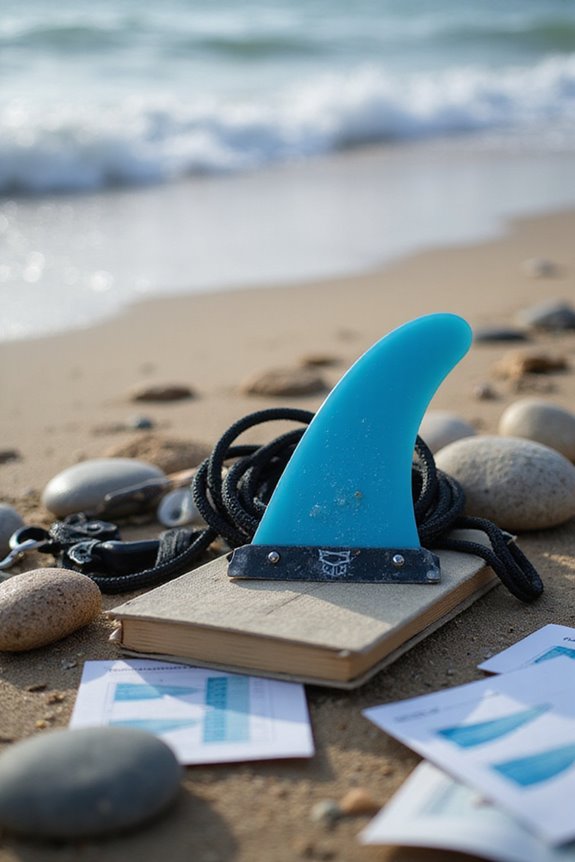
As we commence our surfing journey, recognizing that unpredictability is a core aspect of the sport can greatly enhance our experience. Embracing uncertainty helps us understand that surf conditions—like wave size, shape, and wind direction—vary considerably. Each session presents new challenges, from beach breaks to reef breaks, requiring us to adapt our equipment accordingly.
Moreover, we must accept that external factors, such as ocean hazards and weather variability, can impact our performance. By acknowledging these elements, we can reduce frustration and focus on improving our skills. Ultimately, accepting surfing’s unpredictability fosters resilience and encourages us to learn from each experience, paving the way for progress and enjoyment in our surfing journey. Additionally, having a solid understanding of wave consistency is essential for ensuring a safer and more enjoyable learning experience.
Practical Tips to Handle Frustration as a Beginner
Build a Supportive Community****
Connecting with fellow surfers can provide encouragement and reduce feelings of isolation. Sharing experiences normalizes the ups and downs we all face.
Mindfulness Techniques
Practicing mindfulness techniques, such as breathing exercises, can enhance our focus and help us stay present while surfing. These techniques can also calm our minds during frustrating moments.
Maintain Fitness
Regular exercise, including yoga and swimming, builds endurance and improves our overall performance. A strong body helps us feel more resilient and less fatigued during sessions. Incorporating mindfulness practices into our routine can further enhance our ability to manage frustration effectively.
Celebrating Small Victories to Boost Motivation
Celebrating small victories can greatly enhance our motivation as beginner surfers, especially when we encounter challenges. By acknowledging our progress, even minor achievements can elevate our mood and reduce frustration. Each small win, such as successfully paddling out or catching a wave, triggers a dopamine release that reinforces positive behavior.
To effectively celebrate progress, we can:
- Set achievable short-term goals, like trying new surf spots.
- Reflect on these achievements to create emotional recognition.
- Use visual aids, such as achievement charts or reward jars.
Sharing our successes with friends not only enhances motivation but also builds a supportive community. Recognizing these milestones is key to maintaining momentum and commitment in our surfing journey.
The Importance of Consistent Practice
The journey to becoming a proficient surfer hinges on the importance of consistent practice. Regular surf lessons, ideally once or twice a week, greatly enhance skill retention and foster muscle memory. When we practice frequently, we reduce the time needed to reacquaint ourselves with the basics, allowing us to build on our skills effectively.
Moreover, consistent practice helps us manage fatigue and improve our physical conditioning, making our sessions more enjoyable. As we gain familiarity with the ocean and develop essential techniques, our confidence grows. This steady improvement mitigates frustration, and we start to see progress. By committing to regular practice, we lay a strong foundation for long-term success in our surfing journey.
Seeking Support and Community in Your Surf Journey
Finding a supportive community can greatly enhance our surfing experience. Joining surf clubs is one effective way to build community connections. These clubs offer coaching, equipment rentals, and social events, creating an ideal environment for beginners.
Additionally, specialized groups, like Surfing Moms, cater to specific demographics, addressing unique challenges while fostering a judgment-free atmosphere.
Surf camps also play a vital role in establishing support networks, offering immersive experiences that unite surfers from various backgrounds.
Frequently Asked Questions
How Can I Choose the Right Surfboard for Beginners?
When choosing a surfboard, we recommend starting with a soft top for safety and stability. As we progress, exploring an epoxy board can enhance performance while maintaining buoyancy. Let’s find what suits our needs best!
What Should I Wear for My First Surfing Sessions?
As we plunge into our first surfing sessions, let’s embrace the waves with proper gear. Wetsuit options keep us cozy, while surf accessories, like waterproof bags, guarantee our essentials flow smoothly through the surf adventure.
How Do I Find Beginner-Friendly Surf Spots?
To find beginner-friendly surf spots, we can check local surf communities for recommendations. They often highlight ideal locations with gentle waves and supportive environments, making our surfing journey enjoyable and safe as we learn together.
What Are the Best Times of Year to Start Surfing?
As we ride the waves of opportunity, let’s embrace the seasonal conditions. The best times to start surfing often align with warm summer breezes and gentle wave patterns, making our journey smoother and more enjoyable.
How Can I Improve My Paddling Technique Specifically?
To improve our paddling technique, we should practice specific paddling drills focusing on paddle placement. By refining our arm motions and maintaining proper body positioning, we’ll enhance our efficiency and overall performance in the water.